
by SISIF0YE | Jul 23, 2025 | ADAPT MASTERY™, Business Strategy, Change management, Leadership, Organization Culture, Personal Development
Building Competitive Advantage Through Cultural Resilience
Your biggest competitor isn’t who you think it is. It’s your own culture’s inability to change.
I learned this the hard way, watching seemingly invincible organizations crumble while scrappy startups ate their lunch. The difference wasn’t money, technology, or talent. It was something simpler: some cultures get stronger through change. Others break.
Your competitors can copy your products. They can steal your people. They can match your prices. But they can’t copy how your organization thinks, learns, and responds when things go sideways.
That’s your real competitive advantage. Not what you sell, but how quickly you can change what you sell when the world shifts. Not your current strategy, but your ability to create new strategies on the fly.
Organizations with resilient cultures share three traits:
They turn problems into fuel. While others waste energy hiding mistakes, they’re busy learning from them. Every crisis makes them smarter.
They trust people to think. Decisions happen where problems live, not in boardrooms. Speed comes from trust, not control.
They see change as normal. They don’t wait for stability to return. They build for permanent motion.
The Numbers Tell the Story. This isn’t philosophy. It’s economics.
Organizations with adaptive cultures recover from setbacks three times faster. They launch new products in half the time. They keep their best people longer. Not because they avoid problems, but because problems make them stronger.
When COVID hit, rigid organizations waited for normal to return. Today, Trump’s policies are shaking nations, businesses closing in USA and in countries reliant on support from the US Government. Adaptive ones were already building what came next. They didn’t have pandemic plans. They had cultures that could handle anything.
Building Your Edge
Creating an adaptive culture isn’t about speeches or slogans. It’s about changing how work actually works:
- Celebrate learning, not just winning. Make heroes of people who spot problems early, not just those who close deals. Ask “what did we learn?” before “what did we earn?”
- Give power to people closest to problems. They see solutions you never will. Trust them with decisions. Watch how fast you move.
- Creating an adaptive culture isn’t about speeches or slogans. It’s about changing how work actually works:
- Get comfortable being uncomfortable. Practice changing before you have to. Run drills where things go wrong. Make adaptation a daily habit, not an emergency response.
- Track resilience like revenue. How fast do you bounce back from setbacks? How many solutions come from unexpected places? How often do people say “let’s figure it out” instead of “that’s not my job”?
The Choice You Face
Every organization has the same decision to make.
You can build higher walls and hope change doesn’t find you. You can perfect your current strategy and pray the world stands still. You can wait for disruption to force your hand.
Or you can build a culture that eats change for breakfast. Where challenges energize instead of exhaust. Where “we’ve never done this before” is exciting, not terrifying.
Because here’s the truth: the future belongs to organizations that can create any future they need. Not the ones with the best plans, but the ones that can make new plans fastest.
What Now?
Stop protecting yourself from change. Start preparing yourself to use it.
The adaptive edge isn’t something you buy or install. It’s something you build, decision by decision, response by response. It’s choosing curiosity over certainty. It’s trusting your people more than your processes. It’s believing that whatever comes next, you’ll figure it out together.
And unlike every other advantage you can build, this one gets stronger every time you use it.
Ask yourself: if your biggest competitor disappeared tomorrow, would your culture help you seize the opportunity or waste it? If everything you sell became obsolete overnight, how fast could your organization create something new? Your answers tell you everything about your real competitive advantage.
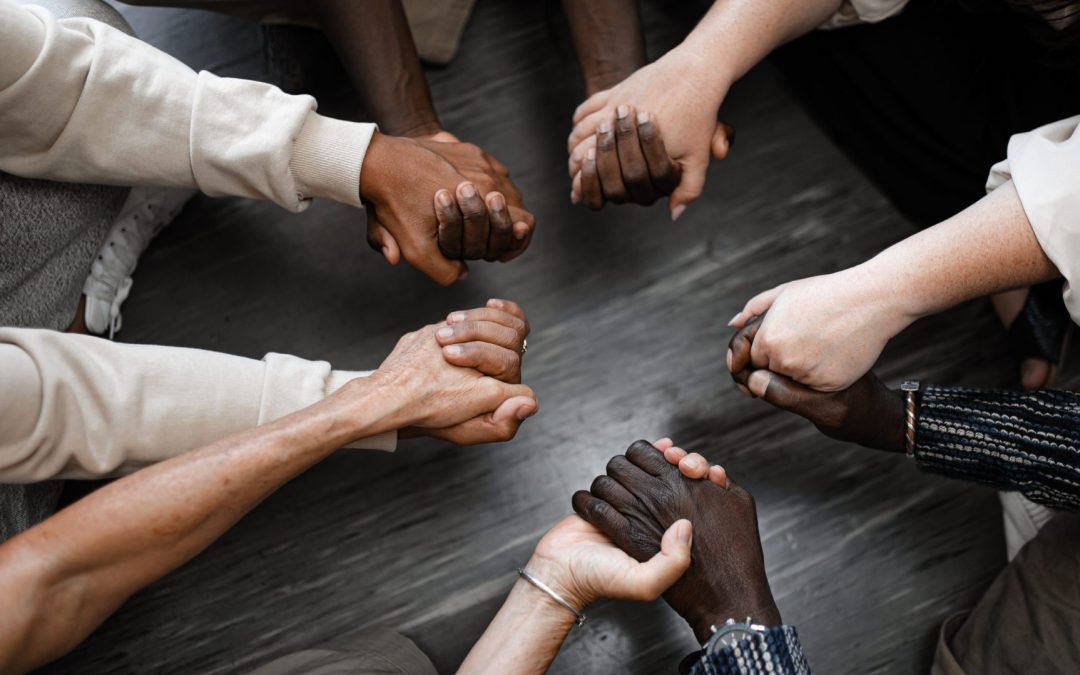
by SISIF0YE | Jul 17, 2025 | Safeguarding, Organization Culture
How protective systems accelerate rather than slow innovation
Let’s be honest: in the world of NGOs and development, safeguarding is often treated like a chore. It’s the policy you update once a year, the training you squeeze in, the checklist you tick off before moving on to “real work.” Many people see it as something that slows us down.
But I believe we’ve got it all wrong. Safeguarding isn’t a hurdle—it’s the thing that lets us move faster, try more, and do better.
What Safeguarding Really Is
In development and humanitarian work, safeguarding is about addressing the harm and abuse caused by civil society organisations (CSOs)—to their staff, volunteers, programme participants, or anyone else they interact with.
It’s not about solving every form of violence in society, like gender-based violence or abuse in the home. But if someone raises a concern like that, a good safeguarding system will know how to respond or refer them to the right support.
At its core, safeguarding is about making sure our people, programmes, and communications don’t cause harm—and taking action if they do.
I’ve seen, time and again: people only speak up, share ideas, and take action when they feel safe. When staff and partners trust the systems around them, they’re not afraid to point out problems or suggest new ways of doing things. They know that if something goes wrong, they’ll be listened to—not blamed or ignored.
But when people worry about being punished or pushed aside, they keep quiet. Risks go unnoticed. Small problems turn into big ones. Innovation dries up—not because of too many rules, but because of too much fear.
Safeguarding Is Permission, Not Prevention
The best organizations I’ve worked with don’t treat safeguarding like a compliance task. They use it as a launch pad.
When everyone knows the boundaries, who to talk to, and what happens if something goes wrong, they can focus on what really matters: helping communities, solving problems, and trying new things.
Safeguarding isn’t about making people cautious. It’s about building trust. And when people feel protected, they’re more willing to take smart risks, learn from mistakes, and push for real change.
What It Looks Like in Practice
Organizations that embed safeguarding into their DNA do a few key things differently:
- They make safety something everyone can see and talk about. Raising concerns is welcomed, not punished.
- They treat every report as a chance to learn, not something to hide.
- They build protection into every project from the start—not as an afterthought.
- They care about trust, not just ticking boxes.
Today, trust is everything. Donors, partners, and communities want to work with organizations that are safe, open, and accountable.
Safeguarding isn’t just about avoiding harm—it’s about unlocking your team’s best work and earning the trust that makes real impact possible.
What Will You Do?
So, ask yourself:
- Is your organization treating safeguarding as a roadblock—or as a launch pad?
- Are your systems holding you back—or helping you do your best work?
The future belongs to organizations that get this simple truth:
The safest places are the most creative. The most trusted teams are the ones that change the world.
Stop seeing safeguarding as a brake.
Start using it as your strategy for real impact.
Mofoyeke Omole
Organizational Resilience Strategist

by SISIF0YE | Jun 30, 2025 | Resilience, Organization Culture, Safeguarding
The Resilience Paradox: Why the Strongest Organizations Are Those That Admit Vulnerability
We’ve been thinking about resilience all wrong. For years, organizations have equated strength with invincibility. They polish their image, hide their struggles, and punish anyone who admits uncertainty. But here’s what I’ve learned working with organizations across continents: the ones that last aren’t the ones that never crack. They’re the ones brave enough to show you exactly where the cracks are. When leaders say “I don’t know,” something powerful happens: everyone else starts looking for answers. When organizations admit their weak spots, people rush to strengthen them. When you trust people with problems, they trust you with solutions. This isn’t soft management theory. It’s human nature. We don’t trust perfection—we trust honesty. We don’t follow invincibility—we follow humanity. And we don’t give our best to organizations that pretend everything’s fine. We give it to ones that trust us with the truth.
The Protection Paradox
Here’s the irony: organizations that admit vulnerability become less vulnerable. By mapping where they might break, they prevent the breaking. I see this constantly in my safeguarding work. The organizations with the strongest protection aren’t those claiming they’re risk-free. They’re the ones saying, “Here’s where someone could get hurt, and here’s exactly what we’re doing about it.” They turn vulnerability into strategy. Weakness into wisdom.
What This Actually Looks Like
Resilient organizations do three things differently:
- They normalize not knowing. Instead of pretending they can predict everything, they build systems that work regardless. They plan for disruption, not around it.
- They reward truth over comfort. Bad news travels fast because it’s useful. The person who spots the problem gets thanked, not silenced.
- They practice being wrong. They discuss near-misses openly. They run “what if we fail” scenarios. Every crack becomes intelligence, not embarrassment.
The strongest organizations aren’t those without cracks. They’re those that turn their cracks into windows—letting light in, letting people see through, letting solutions flow both ways.
Your Move
So, here’s my challenge: Where is your organization pretending to be strong when it could be getting stronger? What problems are you dressing up as strategies? Which vulnerabilities could become your biggest advantages if you just admitted them? The future doesn’t belong to organizations that never fail. It belongs to those honest enough to admit where they might fail—and brave enough to ask for help before they do. Resilience isn’t about being unbreakable. It’s about being real enough to bend without breaking. And that starts with seven words most organizations are terrified to say: “We don’t know, but we’ll figure it out.” Try it. Watch what happens.
Mofoyeke Omole Organizational Resilience Strategist

by SISIF0YE | Apr 17, 2025 | Organization Culture, Personal Development, Strategic Thinking
Singing – Big Big things ni mo like yen yen yen (lol)
Hey friend, can we have an honest conversation about growth? Because I’m seeing something happen over and over that breaks my heart.
You know that pressure you feel to scale quickly? That voice telling you bigger is always better and faster is always right? I need you to know something important: that voice is often wrong.
I’ve watched so many amazing organizations—businesses with incredible potential, nonprofits with powerful missions—rush into expansion before they were ready. And you know what happened? They lost what made them special in the first place.
I remember sitting across from a client who had built this incredible Arabian tea parlor (you know me, you know I love Arabian teas and fish) with steady patrons every night. “I thought three new locations in one year was the dream,” He told me, frustrated. “Now I’m drowning in debt, my original outlet is suffering, and I barely recognize my own business anymore.”
Sound familiar? Maybe you’re feeling that same pressure right now.
What Actually Happens When You Rush
When you push for fast growth before you’re ready, here’s what typically follows (and I’m telling you this because I’ve seen it too many times):
- That special culture you built? It gets diluted as you rapidly bring in people who haven’t absorbed what makes you different.
- Your quality starts slipping because systems that worked perfectly when you were smaller just can’t keep up.
- Cash flow becomes a constant nightmare. Growth eats money before it makes money—something those “scale fast” gurus often forget to mention.
- Your best people—including you—burn out trying to handle both current work and expansion at the same time.
I’m not sharing this to discourage you. I’m sharing because I believe in what you’re building, and I want it to last.
The Power of Taking Your Time
The organizations I’ve seen thrive long-term have a different approach, and I think there’s a lot we can learn from them:
- They perfect their operations at each stage before moving to the next (think of it as mastering one level before unlocking the next)
- They’re not afraid to say “no” to opportunities that might distract them from getting the fundamentals right
- They invest deeply in their people and culture, knowing that’s the foundation everything else builds on
- They build financial reserves because having that cushion gives you choices when opportunities or challenges arise
- They listen closely to feedback and fix problems while they’re still small
These businesses aren’t afraid of growth—they just respect it enough to approach it with intention.
Questions to Ask Yourself (Because I Care About Your Success)
Take a moment with these questions. Be honest with yourself:
- If your organization doubled in size tomorrow, what would break first?
- Which parts of your operation still need fine-tuning before you scale them?
- Are you chasing growth because it truly serves your mission, or because you feel like that’s what successful organizations are supposed to do?
- What could you achieve by going deeper rather than wider right now?
No judgment in your answers—just clarity.
You’re building something important. Best give it the strong foundation it deserves.
Let’s Take Action Together
No matter what size you are or what industry you’re in, here are some steps you can take right now:
- Check your foundations: What systems need strengthening before you add more weight?
- Define what “enough” looks like for you: Success doesn’t always mean endless expansion. What’s your “right size”?
- Plan your pace: Create growth milestones based on readiness, not just opportunity
- Be transparent about your approach: Help your team, investors, or board understand why deliberate growth creates more lasting value
Remember the mighty oak tree? It doesn’t rush to reach its full height in a single season. It takes its time building a root system that can support whatever comes—storms, droughts, and yes, eventually, impressive growth.
You deserve to build something that lasts, not just something that grows fast. And I’m here cheering you on every step of that journey. Because the question isn’t whether you’ll grow. It’s whether you’ll grow strong enough to last.
PS: If you’re nodding along but wondering how to actually put these ideas into practice, you’re not alone. The path forward often feels clearest when you have someone walking beside you who’s been there before.
That’s where I come in. I help individuals and organizations just like yours simplify the complex, build resilient cultures, and untangle those messy systems that keep you stuck. Whether you’re a small business owner feeling overwhelmed by growth challenges, a nonprofit leader trying to increase your impact, or a corporate team navigating change – I’ve got tools that can help.
The first step is often the hardest, but it doesn’t have to be complicated. Reach out for a conversation about where you are and where you want to go. No pressure, no complicated frameworks – just real talk about real challenges.
Because you deserve to build something that works for you, not against you.
Ready to take that step?
Connect with me at me@mofoyekeomole.com and let’s start clearing the path forward together.

by SISIF0YE | Feb 14, 2025 | Organization Culture
When Adeola first opened “The Needle & Thread,” her bespoke tailoring shop in the heart of Lagos, she was a solopreneur. Armed with her sewing machine, a dream, and a passion for exquisite craftsmanship, she meticulously crafted each garment with love and attention to detail. Those early days were a whirlwind of solo effort – from sourcing the finest fabrics to meeting demanding deadlines – but Adeola thrived on the independence and the satisfaction of creating something beautiful from scratch.
As word of her exceptional tailoring spread, Adeola’s workload grew exponentially. Soon, she realized she couldn’t keep up with the demand alone. She began to hire talented seamstresses (stylists as we call them here), each with their own unique skills and perspectives. Initially, Adeola revelled in the expansion, the shop buzzing with the rhythmic hum of sewing machines and the chatter of creative minds. However, as the team grew, she noticed subtle shifts in the shop’s dynamic. Minor disagreements, scheduling conflicts, and occasional lapses in quality began to surface.
One afternoon, while meticulously hand-stitching a delicate lace overlay for a particularly challenging order, Adeola overheard Bisi, one of her first hires, gently guiding a new seamstress on the intricate art of French seams. “Remember,” Bisi said, “we don’t just create clothes; we craft experiences.” That simple statement resonated deeply with Adeola. It captured the essence of what she had hoped to create at The Needle & Thread – a space where craftsmanship was not just about technical skill, but about creating something meaningful.
Cultivating a Culture of Excellence
Adeola realized that she needed to move beyond simply managing tasks and actively cultivate a shared sense of purpose among her team. She introduced the following initiatives:
The Craftsmanship Creed: Instead of a formal mission statement, Adeola defined three core values:
- Precision in Every Stitch: A commitment to impeccable quality and attention to detail.
- Elevating the Art of Tailoring: A shared passion for continuous learning and pushing creative boundaries.
- Sewing Together a Stronger Team: Fostering a supportive and collaborative environment.
The Stylist Spotlight: Each month, Adeola would recognize a team member who exemplified one of the core values. These “spotlights” weren’t about competition, but about celebrating individual contributions and reinforcing desired behaviors.
The Masterclass Series: To encourage continuous learning, Adeola organized workshops and guest lectures on advanced tailoring techniques, sustainable fashion practices, and the history of fashion.
Within months, the positive impact of these initiatives became evident. The team’s morale soared, communication improved, and the quality of their work reached new heights. New hires quickly embraced the “Needle & Thread” ethos, and the shop became known not just for its exquisite tailoring but also for its exceptional team spirit.
Lessons for Every Entrepreneur
Adeola’s journey highlights several crucial lessons for building a thriving company culture:
- Define Your Core Values: Identify the unique qualities that make your business special and articulate them in a meaningful way.
- Lead by Example: Demonstrate your values in your own actions and interactions.
- Foster a Culture of Recognition and Appreciation: Celebrate individual and team successes.
- Invest in Continuous Learning: Encourage growth and development within your team.
- Trust the Process: Building a strong culture takes time and consistent effort. Be patient and persistent in your efforts.
Ultimately, a strong company culture isn’t just about rules and regulations; it’s about creating a shared sense of purpose and inspiring your team to achieve greatness together. Just as a skilled tailor transforms fabric into something beautiful, you can transform your workplace into a thriving community of passionate and talented individuals.
PS: If you haven’t downloaded my free editable Reality-Based Confidence Accelerator Workbook, please get a copy here: https://mofoyekeomole.com/resources-hub/. It’s one resource guaranteed to help you boost your productivity and inter-personal skills

by SISIF0YE | Sep 27, 2024 | Safeguarding, Learning and Development, Organization Culture
In a world where well-meaning actions can unintentionally cause harm, safeguarding has emerged as a critical area of focus for development organisations. On July 17, 2024, I facilitated a comprehensive safeguarding training for the Benue Rural Development Initiative (BENGONET) held at the Lawyers Alert Conference Hall in Makurdi, Benue State. This training aimed to enhance the understanding of safeguarding principles and practices among non-government organisation (NGO) leaders, with the overarching goal of reshaping their approach to development work.
A glimpse into the training
The day-long session was designed to be both interactive and informative, involving 30 participants, including the BENGONET chair Mrs Ugboga and Mr Nathaniel Awuapila, who co-facilitated some sessions, bringing in their knowledge of the local context and safeguarding expertise.
Participants were introduced to the core concepts of safeguarding, including the three pillars of safeguarding, safe programming practices, and the critical role of leadership in fostering a safe working environment. The training wasn’t just about imparting knowledge; it also focused on engaging the participants in a way that encouraged self-reflection and active participation.
Key learnings and challenges
One of the most striking revelations from the training was the significant gap in safeguarding readiness among the participating NGOs. Shockingly, 80% of participants reported that their organisations lacked risk registers, and 70% had no formal safeguarding policies in place. This stark reality highlighted the urgent need for organisations to adopt robust safeguarding measures to protect both their staff and the communities they serve.
The training also unearthed a “saviour mentality” among participants, a mindset that can inadvertently cause harm by failing to empower the very communities NGOs aim to help. Participants learned that safeguarding is not just about protecting individuals from harm but also about fostering a sense of ownership and involvement within the community. This shift from a “saviour” approach to one that is community-led and empowering is crucial for sustainable development.
Another key insight from the training was the potential for organisational communications to escalate crises unintentionally. A case in point was shared when a media statement from a State Secretary led to a crisis in a community. This example underscored the need for careful and thoughtful communication strategies, especially in sensitive or crisis-prone environments.
Recommendations for the future
Participants expressed a strong desire for further training, particularly in safeguarding investigation processes. There was also a call to expand the scope of the Resource and Support Hub (RSH) to address broader Gender-Based Violence (GBV) issues beyond Sexual Exploitation, Abuse, and Harassment (SEAH).
The enthusiasm and engagement of the participants were palpable, but so was the revelation of critical gaps in their current safeguarding practices. Moving forward, it is clear that these organisations will need continued support and follow-up to implement and sustain effective safeguarding measures.
The training has laid a solid foundation, but it is just the beginning. The journey towards true and safe community empowerment is complex, but it is a transformation that is essential for the ethical and effective operation of NGOs in Benue State and beyond.
Conclusion
The BENGONET safeguarding training was a significant step forward in raising awareness and enhancing safeguarding practices among NGOs in Benue State. However, the gaps identified during the training highlight the need for ongoing efforts to ensure that safeguarding principles are not just understood but are actively integrated into every aspect of organisational operations. With the right support and resources, these NGOs are well positioned to make a lasting impact in the communities they serve, ensuring that development work is not only effective but also safe and empowering for all involved.
Read Original Article on RSH Website:
